Major Milestone for SpeedBoostr: Awarded "Built for Shopify"

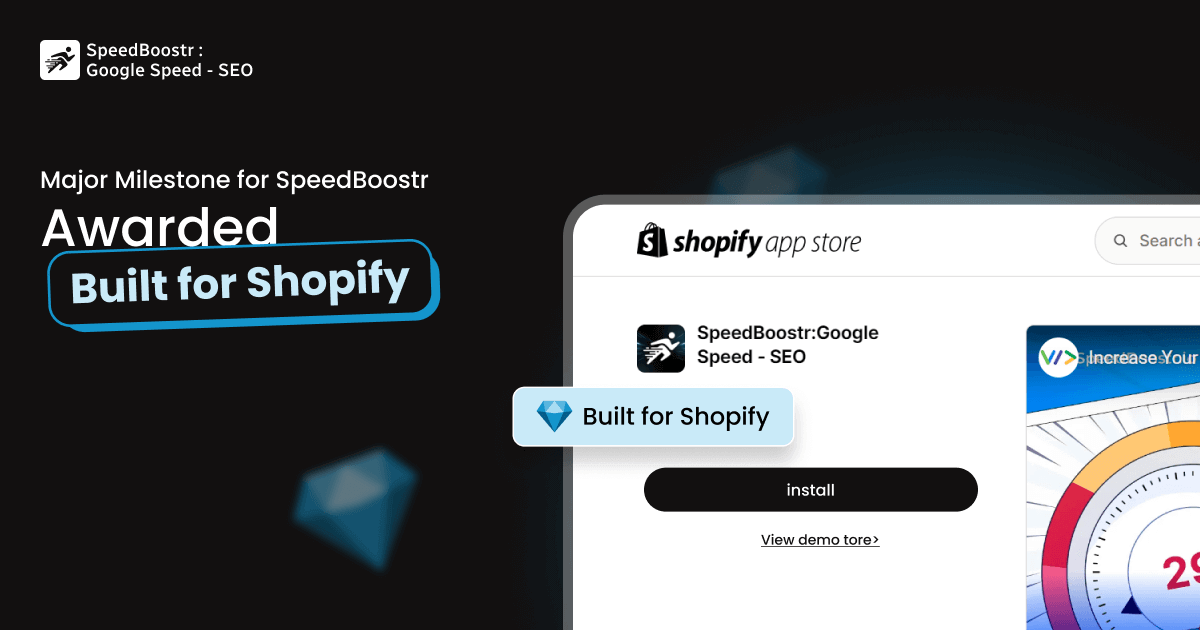
Choosing a Shopify app often means comparing similar features, reviews, and prices. A quality signal from Shopify can make that decision clearer. We are proud to share that SpeedBoostr has earned Built for Shopify status, visible on our Shopify App Store listing.
The SpeedBoostr Built for Shopify milestone confirms that the app has met Shopify’s standards in important areas such as performance, design, and integration. It does not mean Shopify developed the app or that every store will see the same result. It gives merchants independent proof that SpeedBoostr has passed a demanding quality review.
Built for Shopify is Shopify’s highest level of recognition for app quality. The program helps merchants identify apps designed to work well within the Shopify platform and meet established expectations over time.
The status represents assessed product standards and a responsibility to keep meeting them as Shopify changes.
The Built for Shopify badge tells merchants that Shopify has evaluated the app against defined requirements. Shopify’s 2025 merchant guide describes standards around performance, design, integration, and merchant experience.
In practical terms, Shopify looks at areas such as:
The badge is a meaningful trust signal, but it is not a promise of a specific PageSpeed score, search position, or sales increase.
Merchants rarely install an app based on one detail. They compare its purpose, price, reviews, support, compatibility, and effect on the store.
Suppose two speed apps offer similar tools. The badge provides another layer of verification. It helps a trusted Shopify app stand out because Shopify has assessed more than just its marketing claims. That reduces uncertainty without replacing a proper product review.
Earning the recognition was an important point in SpeedBoostr’s product journey, but it was not a finish line. A Built for Shopify app must continue working within Shopify’s changing technical and quality expectations.
For our team, the milestone reinforced a simple principle: performance improvements should remain useful, understandable, and stable. A higher score has limited value if an app creates confusion or unnecessary work.
SpeedBoostr addresses speed and SEO tasks that grow with a store. Its capabilities include image compression, lazy loading, CSS and JavaScript minification, metadata tools, structured data, and 404 redirect management.
Good Shopify app performance also means controlling the app’s own impact. Results will vary by theme, installed apps, media, and existing code, so merchants should measure important pages before and after making changes instead of relying on one score.
An optimization app should make technical work easier to understand. Merchants need to know what is being optimized and what changed afterward.
Merchant feedback guides how the SpeedBoostr Shopify app presents its tools and reports. Store-owner questions reveal where instructions need more clarity or where a repeated task can be simplified. Updates should solve those issues without making the dashboard harder to use.
Shopify continues to update the Built for Shopify program as its platform and app categories evolve. Its October 2025 program update confirms that qualifying apps must meet criteria by their effective dates and are reviewed at least annually.
Meeting Shopify app quality standards requires continued attention to performance, integration, App Store requirements, and category rules. SpeedBoostr must adapt as those requirements change. The badge represents current responsibility, not permanent approval without review.
SpeedBoostr brings speed monitoring, optimization, and technical SEO tools into one Shopify app. Merchants can address common issues without moving between unrelated systems.
Its value comes from how those features support regular store maintenance, not from claiming that one click can solve every performance or SEO problem.
SpeedBoostr helps merchants address heavy images, delayed media, and oversized CSS or JavaScript files, which can add weight to product and collection pages.
The right optimization depends on the store. Image compression may create the largest improvement for one catalog, while another store may need closer attention to theme files or third-party apps. Testing real pages keeps the work tied to the customer experience.
The dashboard provides mobile and desktop page-speed information. Clear reporting matters because one homepage score does not represent the whole storefront.
Product pages, collections, and the cart can behave differently. Reviewing more than one page type helps merchants decide where work is needed instead of applying the same fix everywhere.
Performance tools raise questions when a customized theme or several apps change the same page. Support should clarify the issue before recommending a change.
The team behind SpeedBoostr by WebPlanex assists merchants with product questions and optimization concerns. Response times can vary by request, so the article should not promise instant resolution. The priority is clear guidance that protects store functionality while addressing the reported problem.
No app can promise to be future-proof. Shopify changes, themes are updated, and merchants add new tools. What matters is continued compatibility and attention to new platform requirements.
The Built for Shopify recognition gives merchants evidence of that commitment at the time of evaluation. Strong Shopify app integration should also be treated as ongoing work. Store owners should continue reviewing performance after theme changes, major campaigns, or new app installations.
The SpeedBoostr Built for Shopify recognition gives merchants a clear and verifiable reason to include the app in their evaluation. It does not replace checking features, pricing, reviews, and compatibility with a specific store. It adds an independent quality signal to that decision.
Review SpeedBoostr on the Shopify App Store to confirm its current status, explore its speed and SEO features, and decide whether the app fits the way you manage your Shopify store.


