

Running a Shopify app store in 2026 has become more complex than ever. As stores grow, merchants often struggle with an overwhelming number of tools and time-consuming manual workflows.
When disconnected systems fail to communicate effectively with one another, what starts as a simple setup can quickly become difficult to manage.
These inefficiencies slow down growth. Responding to customers’ questions, managing campaigns, optimizing pages, etc., can take hours a day. This limits how much a business can scale.
And that’s why efficiency is becoming a secret growth lever. The tighter your processes, the more time you can spend on strategy, marketing, and revenue generation.
Shopify apps also function greatly not simply as tools, but as operational multipliers. The right apps empower you to automate processes, integrate workflows, improve customer satisfaction, and merchant productivity. They simplify store operations instead of creating complexity.
Quick Comparison: Best Shopify Apps To Increase Sales (2026)
| App | Best For | Top Features | Pricing |
| Zipchat | Conversion + support automation | AI product recommendations, proactive chat, cart recovery, order tracking, WhatsApp automation | From $49/month |
| Speedboostr | SEO + AI Visibility + Pagespeed | Boost SEO & AI visibility with LLMs.txt, Improve Page speed, Structured data for rich results, Mobile-first optimization, Conversion-focused performance enhancements | Free plan; paid from $9.99/month |
| Klaviyo | Email & SMS automation | Automated flows, segmentation, personalized messaging, analytics | Free plan; custom-based pricing |
| Judge.me | Reviews & social proof | Automated review requests, photo/video reviews, Google rich snippets | Free plan; paid from $15/month |
| ReConvert | Post-purchase upsells | Thank-you page funnels, cross-sells, AOV optimization | From $19.99/month |
| Wiser | AI product recommendations | Frequently bought together, upsell widgets, personalization, analytics | Free plan; enterprise plan |
| OptiMonk | Lead capture & CRO | Exit-intent popups, behavioral targeting, A/B testing, personalization | Free plan; paid from $19/month |
What “Merchant-Friendly Efficiency” Means and How It Can Boost Sales
Running a Shopify store efficiently is not just about speed. It is about doing more with less effort while increasing revenue.
Merchant-friendly efficiency focuses on simplifying operations. This reduces workload and improves decision-making across the business.
- Less manual work Automation reduces repetitive tasks like customer support, follow-ups, and product recommendations. This frees up time for strategic growth.
- Faster decision-making Merchants can act faster than ever on what’s working and address what isn’t, thanks to better data and insights without the delays.
- Better customer experience Faster responses, personalized shopping, and smooth navigation lead to happier customers and higher conversions.
- Automation across workflows Connected systems that run in the background, from marketing to post-purchase, keep an efficient store running.
Top 7 Shopify Apps (Detailed Breakdown)
1. Zipchat (Best Overall for Efficiency + Conversions)
What it is
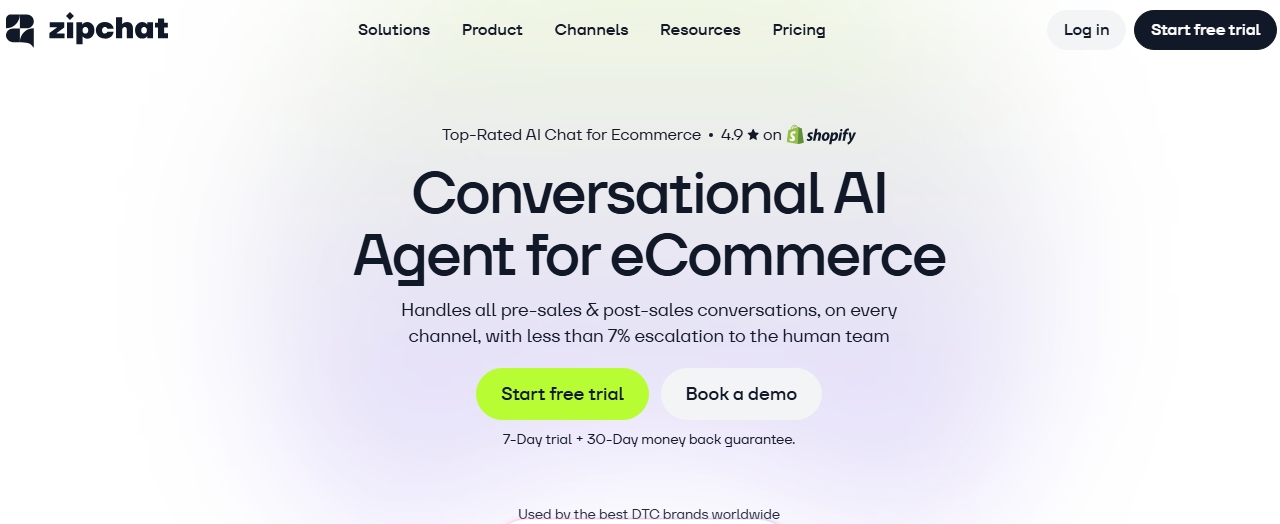
Zipchat is an AI-powered conversational sales assistant built for Shopify stores. It interacts with visitors in real time, answers questions, and suggests products based on behavior as well as stores data.
More importantly, it becomes a support and sales engine. This enables merchants to lessen their workload and boost conversions and repeat purchases.
Best for
Improving conversions while automating customer engagement and support.
Key features
- AI product recommendations
- Proactive chat engagement
- Cart recovery conversations
- Automated customer support
- WhatsApp integration
Pricing
Starts at $49/month.
Ideal store type
Fast-growing brands, high-traffic online stores, and merchants focused on scaling efficiently.
Here's the SpeedBoostr entry in the same format:
2. SpeedBoostr (Best for Speed + SEO in One App)
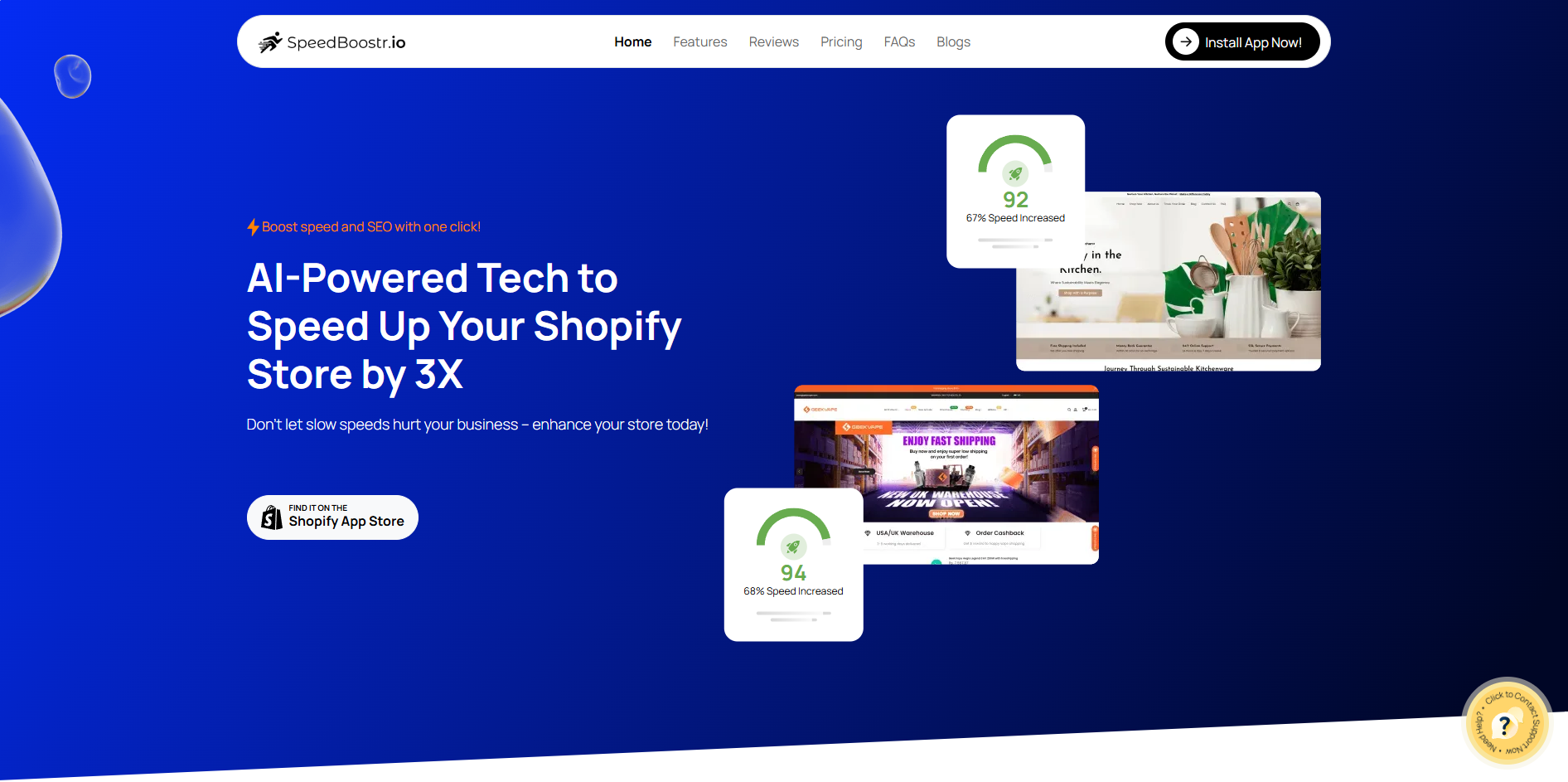
SpeedBoostr is a Shopify app that combines store speed optimization and SEO management into a single dashboard. It handles everything from image compression and JavaScript lazy loading to structured data, meta tags, and AI search visibility, without needing separate tools for each.
More importantly, it runs on automation. Weekly or monthly optimization schedules mean your store's performance doesn't quietly decay as you add new products and apps over time.
Best for Merchants who want page speed, technical SEO, and AI search readiness handled by one app without juggling multiple tools.
Key features
- CSS and JS compression
- Image compression with WebP conversion
- Automated meta tags and image alt text
- JSON-LD structured data generation
- LLMs.txt Generator for AI search visibility
- Advanced Robots.txt Manager
- Google Search Console integration
- Real-time PageSpeed monitoring
- 404 redirect management
Pricing
Free plan available; paid from $9.99/month.
Ideal store type
Shopify stores of any size that are serious about site performance and want to stay visible in both traditional Google search and AI-powered search tools like ChatGPT, Perplexity, and Gemini.
3. Klaviyo
What it is
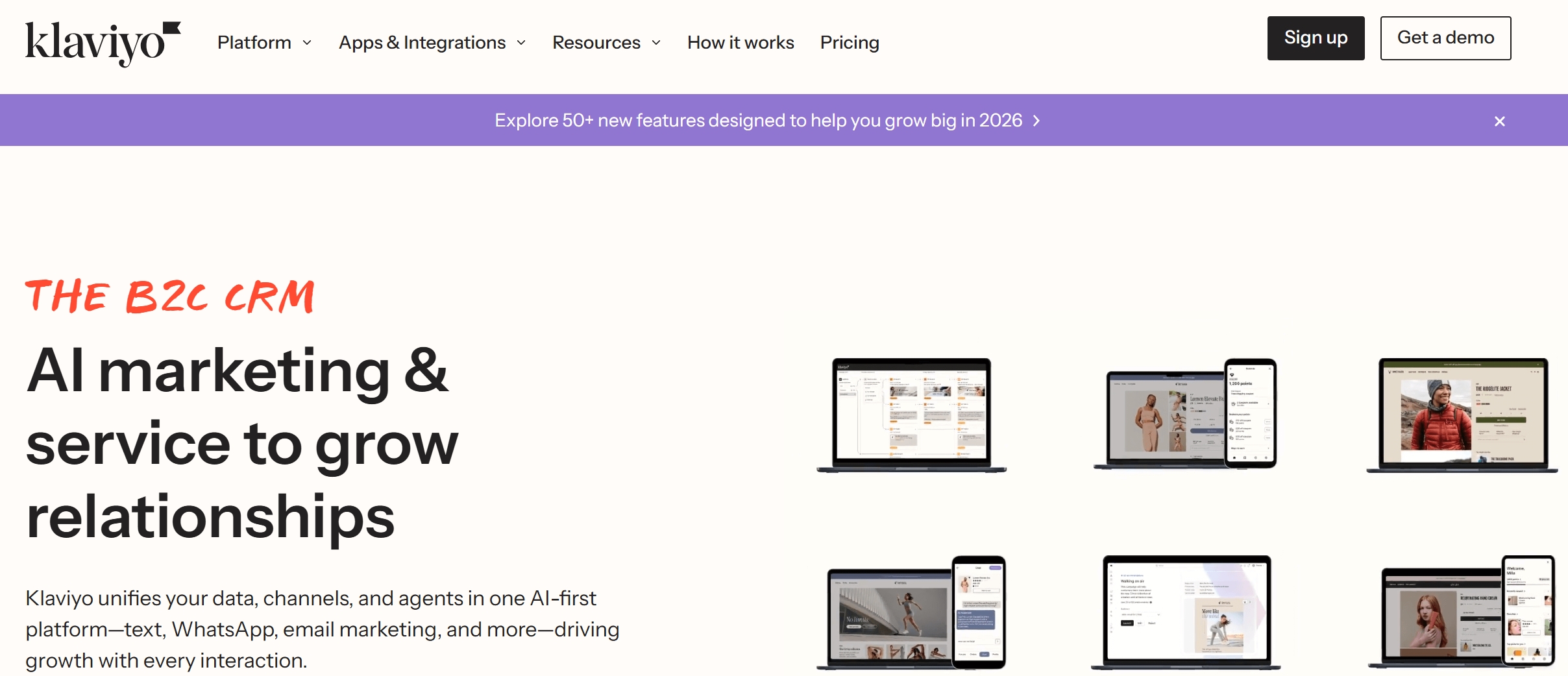
Klaviyo is a powerful email and SMS marketing platform that automates customer communication and retention. It helps merchants scale marketing without manual follow-ups.
Best for
Email marketing automation and customer retention.
Key features
- Email & SMS campaigns
- Customer segmentation
- Automated flows
Pricing
Free plan available; custom-based pricing.
Ideal store type
Growing stores focused on retention and lifecycle marketing.
4. Judge.me
What it is
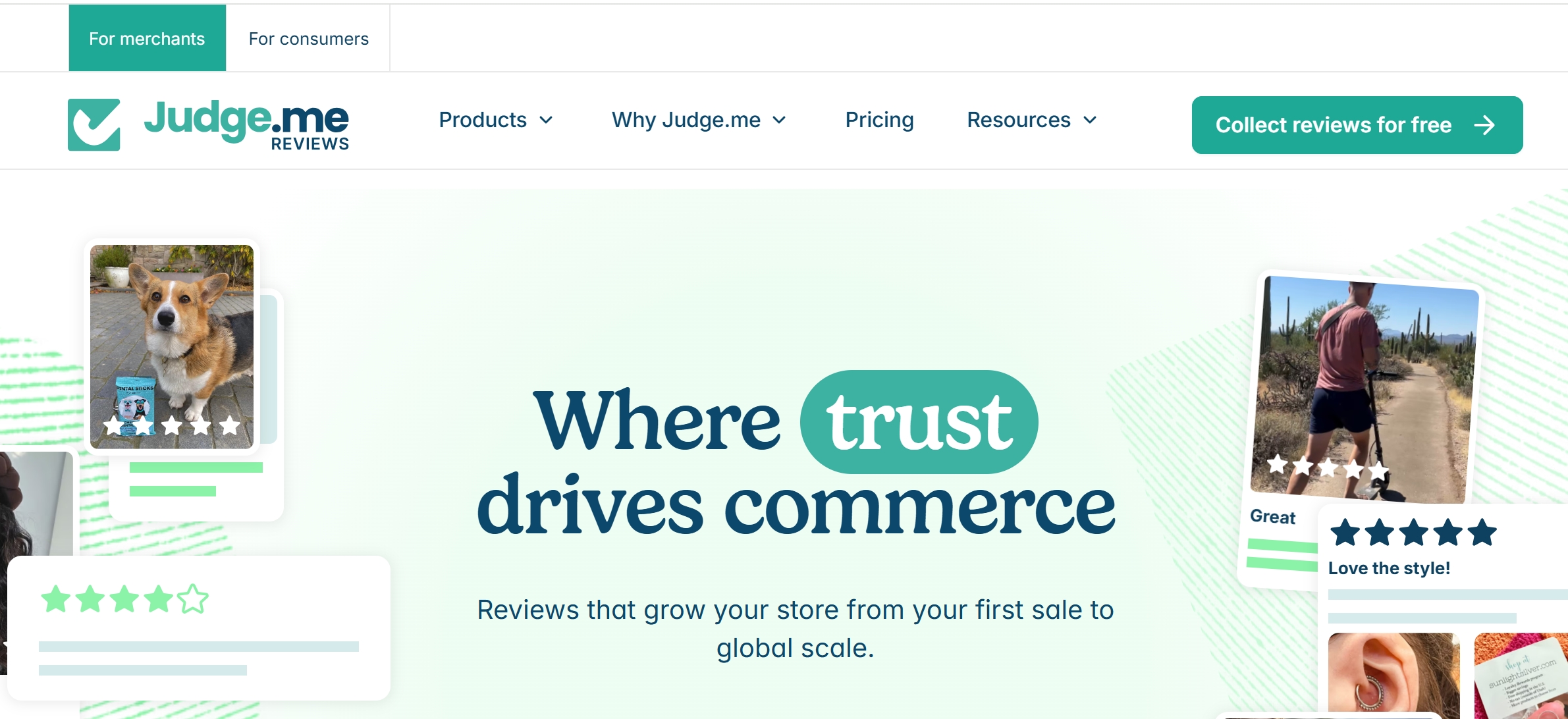
Judge.me is a review and social proof app that helps build trust and improve conversions. It automates review collection and displays customer reviews and ratings that influence buying decisions.
Best for
Building trust and improving conversion rates through reviews.
Key features
- Product reviews
- Photo/video reviews
- Automated review requests
Pricing
Free plan available; paid plan from $15/month
Ideal store type
Stores are looking to build credibility and social proof quickly.
5. ReConvert
What it is
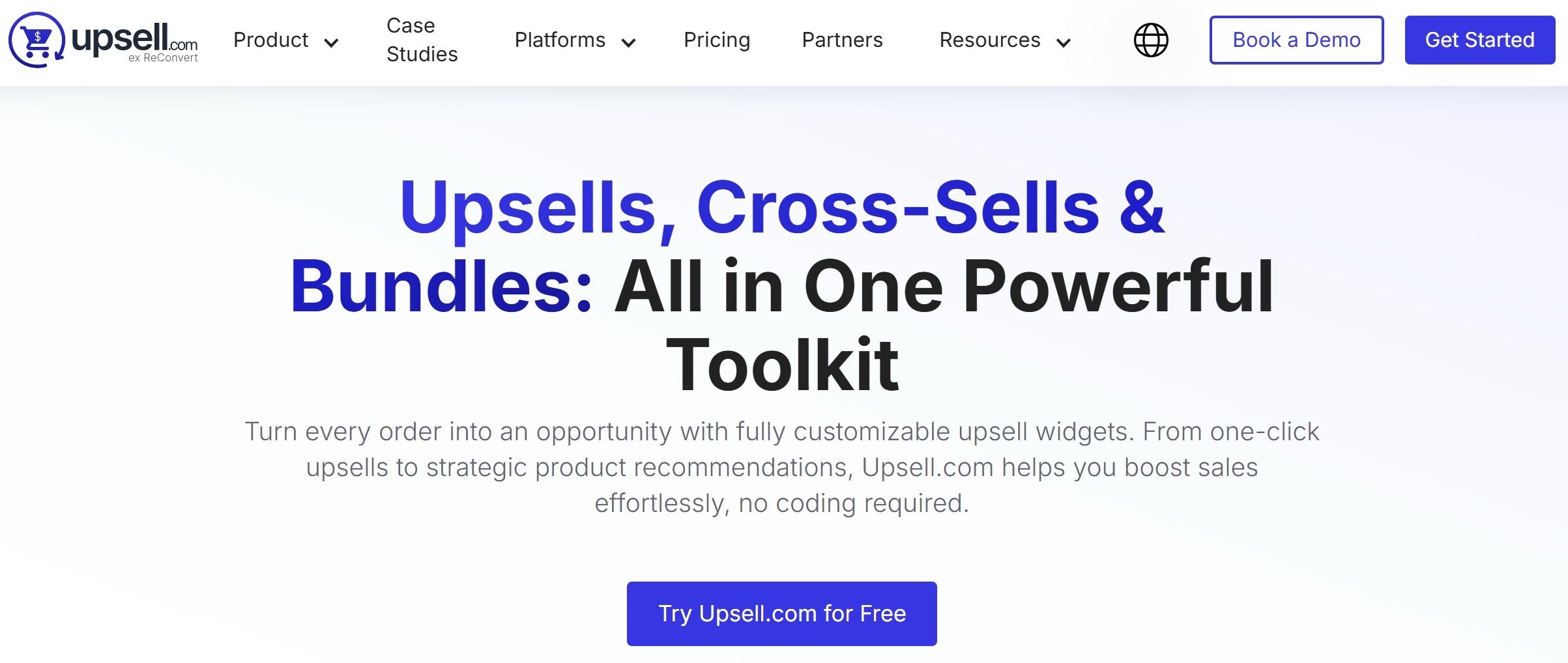
ReConvert focuses on post-purchase optimization by turning the thank-you page into a revenue-generating channel. It helps increase average order value with minimal effort.
Best for
Upselling and cross-selling after checkout.
Key features
- Thank-you page funnels
- Cross-sell offers
- AOV optimization
Pricing
Starts from $19.99/month.
Ideal store type
Stores are looking to maximize revenue from existing customers.
6. Wiser
What it is
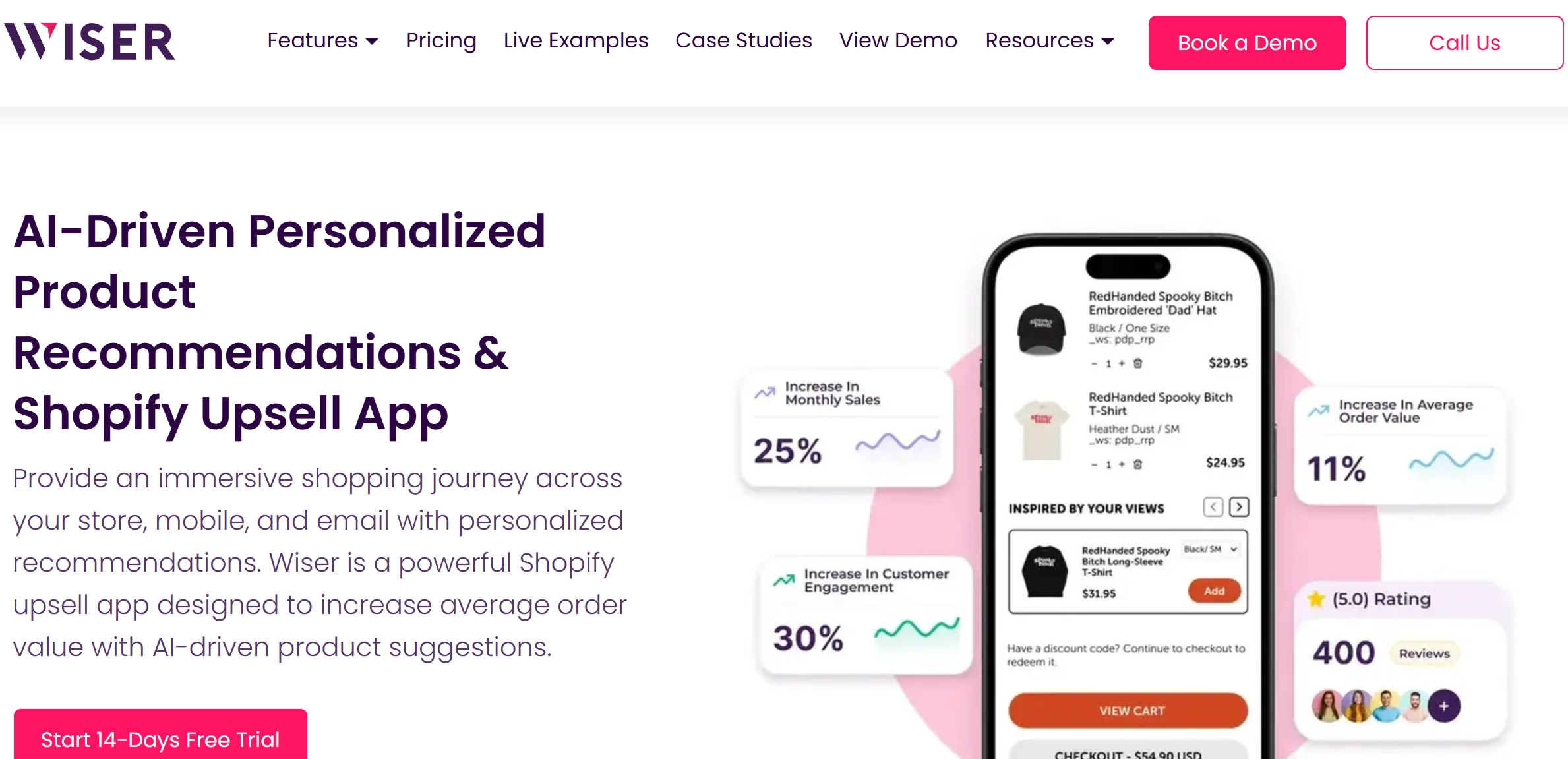
Wiser is an AI-powered product recommendation engine that personalizes shopping experiences. It increases efficiency by automating upsells and cross-sells across the store.
Best for
Personalized product recommendations and upselling.
Key features
- AI recommendations
- Frequently bought together
- Upsell widgets
Pricing
Free plan available; enterprise plan.
Ideal store type
Stores with large catalogs and strong upsell opportunities.
7. OptiMonk
What it is
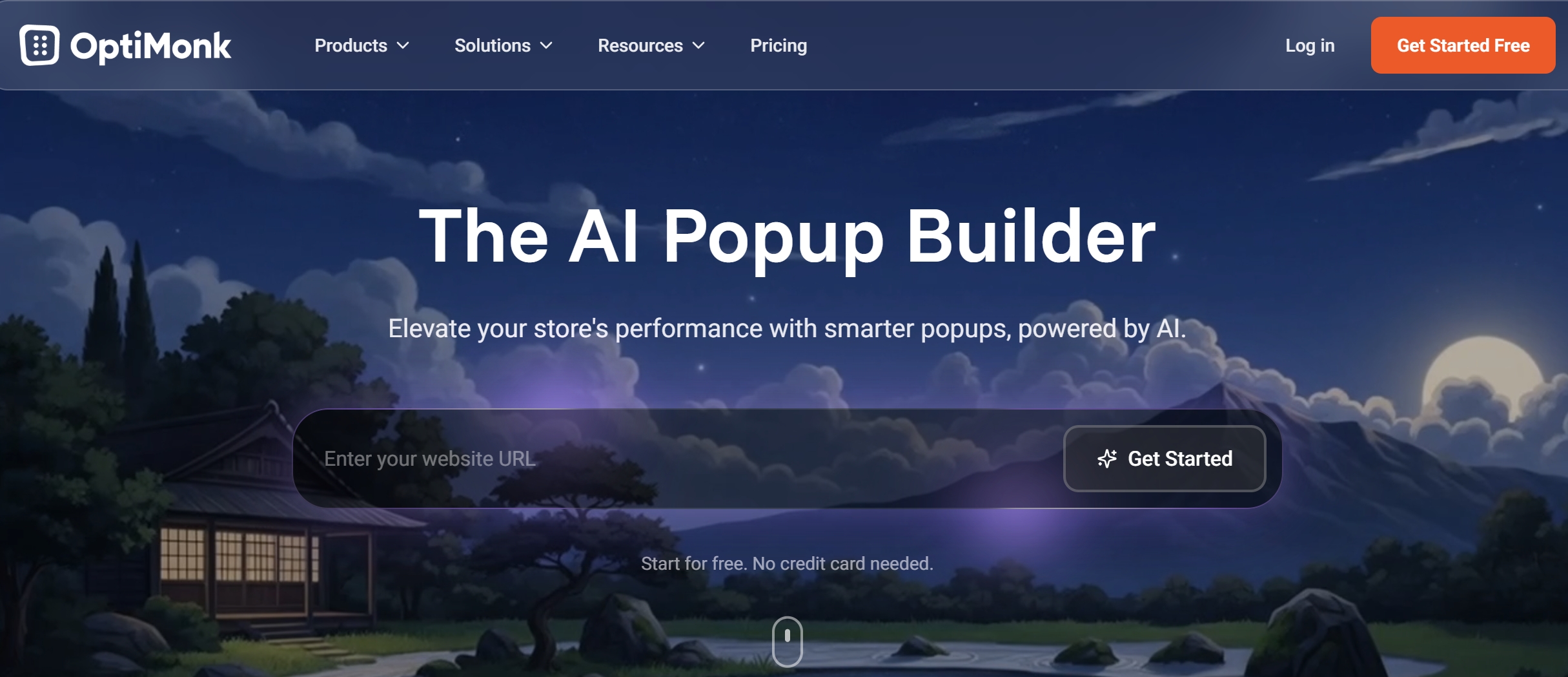
OptiMonk helps convert visitors with targeted pop-ups and on-site messages. It improves efficiency by automating lead capture and reducing cart abandonment.
Best for
Conversion optimization and lead generation.
Key features
- Exit-intent popups
- A/B testing
- Personalization
Pricing
Free plan available; paid plans from $19/month.
Ideal store type
Stores focused on lead generation and reducing bounce rates.
How These Apps Work Together (System Thinking)
Using too many apps can slow your store down. The goal is not more tools, it’s a lean, connected system where each app plays a clear role:
- Automation → Zipchat, Shopify Flow (reduces manual tasks)
- Marketing → Klaviyo (handles email and SMS at scale)
- Conversion → Zipchat, OptiMonk (turn visitors into buyers)
- Trust → Judge.me (builds credibility with reviews)
- UX → PageFly (improves page design and experience)
- Revenue expansion → Zipchat, ReConvert, Wiser (increase AOV)
Instead of stacking tools randomly, high-performing stores build lean systems where apps work together seamlessly.
ROI Section (Efficiency + Revenue)
Efficiency is not just about saving time; it directly impacts profitability.
Formula:
Revenue = Traffic × Conversion × AOV
Profitability = Revenue – Time Cost – Tool Cost
Example:
- Monthly traffic: 50,000
- Conversion rate: 2% → improves to 2.5%
- AOV: $70
Before:
Revenue = $70,000
After optimization:
Revenue = $87,500
Extra revenue:
$17,500
Now add time savings:
- 20 hours/week saved from automation
- Fewer support staff are needed
Even with ~$150/month in app costs, the ROI is clear:
More revenue + less time spent = higher profitability.
Diagnostic Framework
| Problem | Cause | Fix |
| Store feels hard to manage | Too many manual tasks | Use automation tools |
| High traffic, low sales | No guided shopping | Use Zipchat |
| Low retention | No follow-ups | Use Klaviyo |
When This Fails
Even the best apps can fail if used incorrectly.
Common mistakes:
- Too many apps (stack bloat)
- Poor setup or configuration
- No integration between tools
- Over-automation
Risks:
- Slower site speed
- Confused customers
- Wasted spend
Efficiency comes from smart systems, not just installing apps.
Technical Considerations
Before choosing apps, ensure your setup supports efficiency:
- Integrations → Apps should connect seamlessly.
- Analytics → Track performance and ROI.
- Data sync → Ensure consistent customer and product data.
- User-friendly interfaces → Easy to manage without technical skills.
- App compatibility → Avoid conflicts between tools.
Future Outlook (2026+)
Shopify stores are moving toward automation and AI-driven operations:
- AI agents replacing manual workflows.
- Autonomous ecommerce operations.
- Conversational-first storefronts.
- Predictive automation for marketing and sales.
Efficiency will no longer be optional; it will be a competitive advantage.
Strategic Insight (Zipchat Positioning)
Most Shopify apps focus on one area:
- Marketing
- Reviews
- Design
Zipchat connects multiple layers:
- Sales
- Support
- Engagement
This makes it a conversion + efficiency multiplier, not just another tool.
Conclusion
Many Shopify apps solve one problem, but true efficiency lies in the synergy of your tools working together. Systems that are connected reduce manual work and ensure better customer experience. This increases revenue over time.
Apps like Klaviyo, PageFly, Judge.me each play important roles in the ecommerce business. However, Zipchat stands out by acting as a central layer that connects sales, support, and engagement.
It turns conversations into conversions and automates key workflows. This enables merchants to scale revenue and operations without added complexity.
FAQ Section
What are the best Shopify apps for efficiency?
Tools such as Zipchat, Klaviyo, PageFly, and ReConvert can further automate workflows and boost performance.
How many apps should a store use?
The most efficient stores run on 5–8 core apps, all with defined duties.
Are Shopify apps worth it?
Yes. Even small increases in efficiency and conversion yield huge revenue.
What reduces workload the most?
AI chatbots, email flows, and similar automation tools also minimize manual work the most quickly.
Author Akinwale Ojo
Author’s bio Akinwale Ojo is a Content Strategist with over six years of experience in SEO and technical content writing. He helps B2B, B2C, and SaaS companies grow through data-driven content strategies, turning complex product insights into search-optimized articles that improve organic visibility, support lead generation, and strengthen brand positioning.

